Earthwise Seed
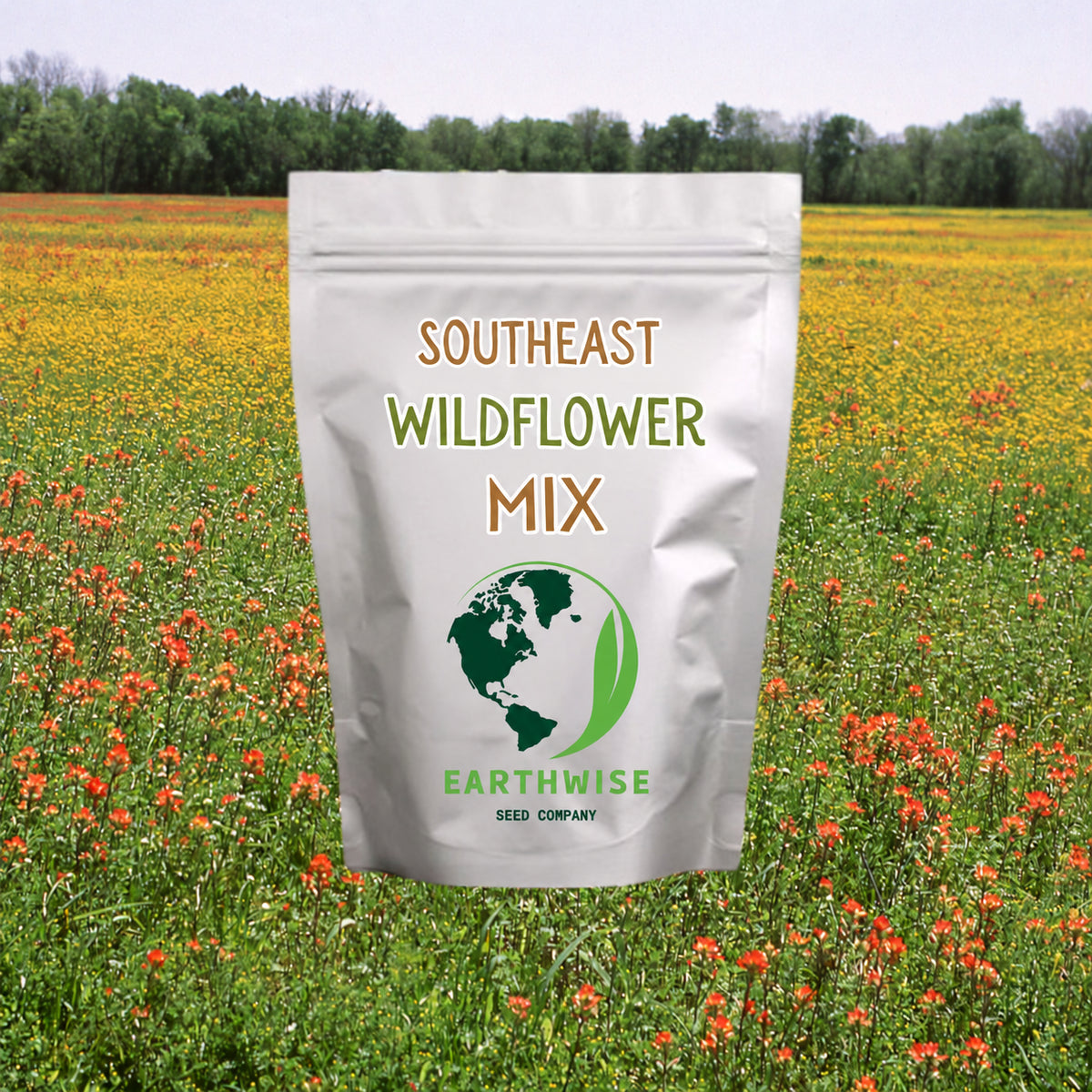
Southeast Wildflower Mix
Southeast Wildflower Mix
Couldn't load pickup availability
Calculate how much seed you need

Have Questions?
Get in touch at 1-833-GRN-SEED

Have Questions?
Get in touch at 1-833-GRN-SEED
Why You’ll Love It
Bring layers of color to a sunny spot with this 23-variety Southeast wildflower mix. Regional natives like wild lupine and purple coneflower grow alongside nonnative flowers like cosmos and sweet alyssum. Shorter blooms grow beneath taller flowers for a meadow-style planting.
This blend contains only wildflower seed. The table below lists each flower and its share of the mix.
What is in the mix
| Seed | Share of seed blend |
|---|---|
| Siberian Wallflower | 5% |
| Shasta Daisy | 3% |
| Lanceleaf Coreopsis | 5% |
| Plains Coreopsis | 3% |
| Cosmos | 5% |
| Cosmos Klondyke Mix | 2% |
| Giant Imperial Larkspur | 5% |
| Purple Coneflower | 4% |
| Indian Blanket | 5% |
| Baby's Breath | 10% |
| Dame's Rocket | 5% |
| Tree Mallow | 2% |
| Gayfeather | 2% |
| Scarlet Flax | 5% |
| Sweet Alyssum | 5% |
| Perennial Lupine | 15% |
| Lemon Mint | 5% |
| Dwarf Evening Primrose | 2% |
| Corn Poppy | 2% |
| Annual Phlox | 2% |
| Clasping Coneflower | 3% |
| Black-Eyed Susan | 3% |
| Scarlet Sage | 2% |
Where It Grows Best
- Sunlight: Full sun.
- Best for: Regional wildflower gardens and naturalized flower plantings.
- Earthwise planting regions: 3 and 4.
Find your planting region. These are Earthwise climate regions, rather than USDA hardiness zones.
Expected Height & Mowing
About 8-60 in across the supplied species. Cosmos can reach about 3-5 ft.
Planting & Care
- Measure your planting area and follow the coverage rate on your seed package.
- Remove competing weeds and debris, loosen the soil surface, and rake smooth.
- Spread the seed evenly and gently press it into contact with the soil.
- Keep the seeded surface evenly moist during germination and early establishment.
- Give flowers open space to establish. Scattering seed over dense, competitive turf is unlikely to create a successful flower planting.
Germination & Establishment
Some annuals may start in 1-4 weeks. Perennial emergence can continue later.
Germination ranges assume suitable soil temperature, consistent moisture, and good seed-to-soil contact. Seed sown for winter dormancy may wait until the next suitable growing season.