Earthwise Seed
Midwest Wildflower Mix
Midwest Wildflower Mix
Couldn't load pickup availability
Calculate how much seed you need

Have Questions?
Get in touch at 1-833-GRN-SEED

Have Questions?
Get in touch at 1-833-GRN-SEED
Why You’ll Love It
This 19-variety mix pairs Midwest natives like wild lupine and purple coneflower with nonnative flowers like cornflower and annual baby’s breath. Annuals bring early color, while perennials add blooms in later seasons.
- 60% of the seed blend is from species native to at least part of the Midwest. The remaining 40% is from nonnative species.
- Annual and perennial seasonal interest
- A full-sun mix for Midwest landscapes
What is in the mix
| Seed | Share of seed blend |
|---|---|
| New England Aster | 2% |
| Cornflower / Bachelor's Buttons | 10% |
| Siberian Wallflower | 8% |
| Lanceleaf Coreopsis | 5% |
| Plains Coreopsis | 3% |
| Larkspur | 5% |
| Sweet William | 3% |
| Purple Coneflower | 5% |
| Perennial Blanketflower | 3% |
| Annual Blanketflower | 3% |
| Annual Baby's Breath | 10% |
| Blue Flax | 10% |
| Perennial Lupine | 15% |
| Dwarf Evening Primrose | 2% |
| Corn Poppy | 3% |
| Prairie Coneflower | 2% |
| Clasping Coneflower | 5% |
| Black-Eyed Susan | 5% |
| Catchfly | 1% |
Where It Grows Best
- Sunlight: Full sun.
- Best for: Wildflower landscapes in the Midwest.
- Earthwise planting regions: 1, 2, 3.
Find your planting region. These are Earthwise climate regions, rather than USDA hardiness zones.
Expected Height & Mowing
Many flowers about 1-3 ft. New England aster can reach about 3-6 ft above the shorter plants.
Planting & Care
- Measure your planting area and follow the coverage rate on your seed package.
- Remove competing weeds and debris, loosen the soil surface, and rake smooth.
- Spread the seed evenly and gently press it into contact with the soil.
- Keep the seeded surface evenly moist during germination and early establishment.
- Give flowers open space to establish. Scattering seed over dense, competitive turf is unlikely to create a successful flower planting.
Germination & Establishment
Some annuals may start in 1-4 weeks. Perennial emergence can be delayed by dormancy.
Annual color can appear first. Perennial growth and flowering increase over later seasons.
Germination ranges assume suitable soil temperature, consistent moisture, and good seed-to-soil contact. Seed sown for winter dormancy may wait until the next suitable growing season.


Absolutely stunning, low-maintenance privacy edge for my East patio. Thank you!
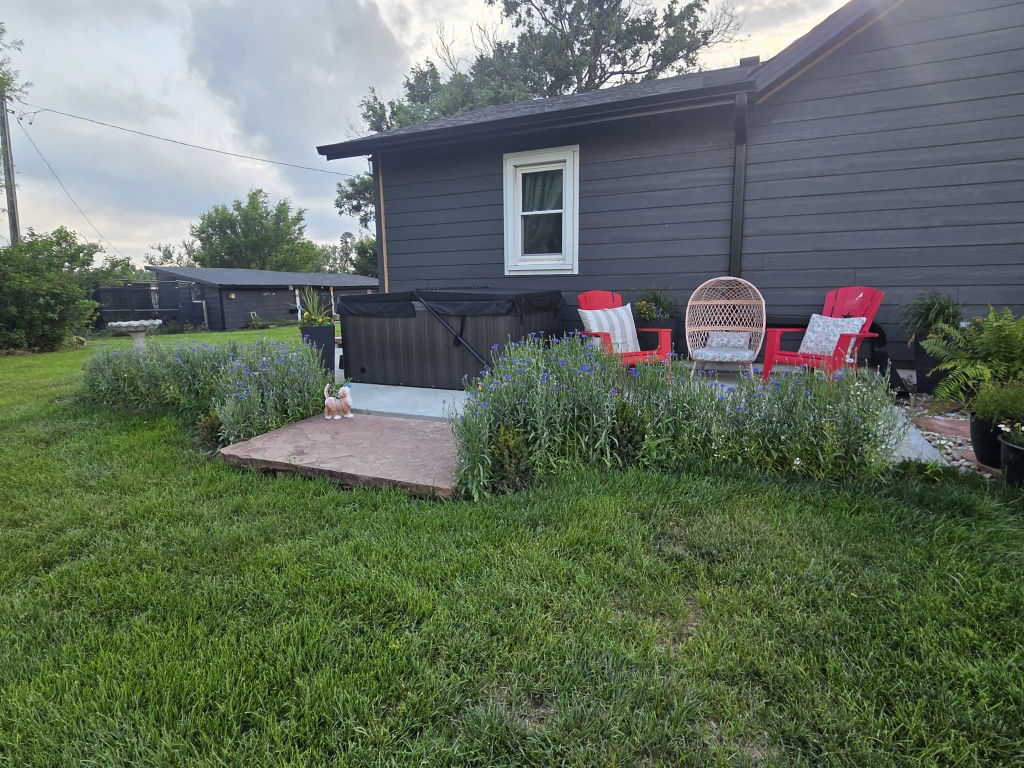
Good mix!
Ordered in april, was not delivered until june. Poor communication
So far, so good. Shipping was a little longer than I hoped but received in time to plant. It isnt Mothers Day yet! The garden is laid out and rendered and my first rows got planted today just before the rains. Hope to get the majority done tomorrow. Yay!
Very nice. I look forward to them blooming
Great